Whilst it is important to diligently protect your brand, the recent decision in Stone & Wood Group Pty Ltd v Intellectual Property Development Corporation Pty Ltd [2016] FCA 820 (Pacific Ale Case) serves as a timely reminder that, much like the brewing of a delicious craft beer, making allegations of trade mark infringement requires extensive preparation, research and good judgment.
Overview of the Pacific Ale case
In the Pacific Ale Case, Stone & Wood Group initially sent letters of demand to the Intellectual Property Development Corporation Pty Ltd (Thunder Road) alleging that by using the words “Pacific Ale” on their beer, they were, amongst other allegations of misleading and deceptive conduct and passing off, infringing the following image mark:
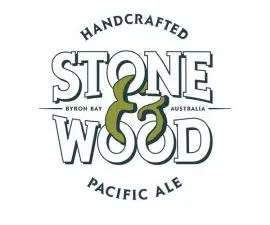
In response to proceedings commenced against them by Stone & Wood Group, Thunder Road counter-claimed based on section 129(1) of the Trade Marks Act 1995 (Cth) (Act), which empowers a person threatened with an action for trade mark infringement to seek a declaration from the Court that the threats are “groundless” and consequently be restrained from making them.
There are two (2) possible defences to a claim under section 129(1) of the Act.
Firstly, section 129(4) provides that a claim under section 129(1) of the Act cannot succeed where the threatener, in this case Stone & Wood, satisfies the Court that:
- the trade mark in respect of which the threats were made is registered; and
- the acts complained of, in this case the threats of proceedings for trade mark infringement against Thunder Road, are in fact an infringement of that trade mark.
Secondly, pursuant to section 129(5) of the Act (emphasis added):
“An action may not be brought, or (if brought) may not proceed, under this section if the registered owner of the trade mark, or an authorised user of the trade mark having power to bring an action for infringement of the trade mark, with due diligence, begins and pursues an action against the threatened person for infringement of the trade mark.”
In responding to Thunder Road’s counter-claim, Stone & Wood unsurprisingly sought to rely on both sections 129(4) and 129(5) of the Act.
The section 129(4) defence
To rely on the section 129(4) defence, Stone & Wood needed to demonstrate that Thunder Road had infringed its registered trade mark. Stone & Wood contended that Thunder Road’s use of “Pacific Ale” (below) was deceptively similar to its own trade mark.
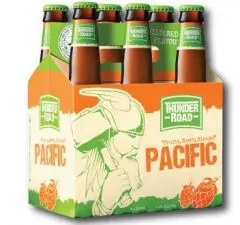
In short, the Court had to determine if a consumer would be likely to have been deceived into concluding that Thunder Road’s Pacific Ale was associated with Stone & Wood’s.
The Court found at paragraph 229 of the judgement that this was not the case, and consequently, Stone & Wood was not successful in leading a section 129(4) defence.
The section 129(5) defence
Paragraphs 235 to 237 of the Pacific Ale case cite Advanced Data Integration Pty Ltd v ADI Ltd [2004] FCA 731 as authority that the section 129(5) defence, in particular the “due diligence” aspect, requires that the threatener, by reference to the circumstances of the case, not unreasonably delay bringing the threatened proceeding.
In the Pacific Ale case the Court held that:
- the threats in question were made on or about 26 February 2015;
- the parties were attempting to resolve the matter without recourse to the Courts;
- by 15 April 2015, or at least shortly thereafter, it was clear that this matter was not going to be resolved privately; and
- the claim for trade mark infringement was not commenced (and was only commenced once Thunder Road brought its section 129 counter claim) until 19 June 2015.
There was no satisfactory reason put forth to explain this delay, and consequently, the Court held at paragraph 241 of the judgement that Stone & Wood did not begin its action for trade mark infringement with due diligence.
Tasting notes
Like quality craft beer, the body of this article is important and we encourage you to enjoy it slowly. However, continuing the beer analogy, the tasting notes from this case are:
- do not presume that your registered trade mark entitles you to make onerous demands to others without first carefully considering your position;
- do not send letters of demand unless you are prepared to commence proceedings reasonably promptly should an out of Court settlement not be reached;
- ensure that your intellectual property portfolio, especially your registered trade marks, provide the level of protection you require to protect your brand.
Links and further references
Legislation
Cases
Stone & Wood Group Pty Ltd v Intellectual Property Development Corporation Pty Ltd [2016] FCA 820
Advanced Data Integration Pty Ltd v ADI Ltd [2004] FCA 731
Further information about trade mark infringement
If you need assistance with trade mark infringement please telephone me for an obligation free and confidential discussion.

Malcolm Burrows B.Bus.,MBA.,LL.B.,LL.M.,MQLS.
Legal Practice Director
T: +61 7 3221 0013 (preferred)
M: +61 419 726 535
E: mburrows@dundaslawyers.com.au

Disclaimer
This article contains general commentary only. You should not rely on the commentary as legal advice. Specific legal advice should be obtained to ascertain how the law applies to your particular circumstances.
Related insights about trade mark infringement
-
Not so swole – Trade marks removed for non-use
The Federal Court examined the evidence needed to prove intention to use a trade mark in good faith. Find out what happened when an application for an extension of time to file a notice of appeal was refused.
-
Confusing marks – Sensis v Senses
Sensis Pty Ltd v Senses Direct Mail and Fulfillment Pty Ltd [2019] FCA 719: Court ruled SENSES marks deceptively similar to SENSIS marks, highlighting importance of engaging intellectual property lawyers when building a brand. Marks can be infringing if spelling is only slightly different, if it resembles another and likely to deceive and cause confusion.
-

Domain name disputes – the case of eazyjet.com
Learn more about domain name disputes and the evidence required to establish confusion, rights, and bad faith. Internet Corporation for Assigned Names and Numbers (ICANN) and World Intellectual Property Organization (WIPO) provide legal elements and remedies, and the implications of failing to respond to a complaint.
-
Is exporting a product a trade mark infringement?
The Trade Marks Act 1995 (Cth) provides protection to Australian trade mark owners, but what happens when their mark is used overseas? Learn more about the protection the Trade Marks Act provides, and the remedies for infringement, by clicking through to the full article.
-
Is using a trade mark in AdWords considered infringement?
A Court concluded that a company had infringed a trade mark using Google AdWords in Veda Advantage Limited v Malouf Group Enterprises Pty Limited [2016] FCA 255. Click through to learn more about the dispute, and the learning points and takeaways.
-
A guide to intellectual property
This article provides an overview of the grounds of invalidity available for revoking a patent, including lack of novelty, inventive/innovative step, usefulness, secret use, manner of manufacture, fraud, false suggestion/misrepresentation, sufficiency, fair basis, and best method.
-
Government’s response to Productivity Commission’s report on intellectual property
The Australian Government is taking steps to shape the future of intellectual property rights. Find out what changes are being proposed and how they could affect you.
-
Should you trade mark your business name and logo?
Registering a Word Mark and Composite Mark (Name and Logo) as a trade mark can offer the best protection for a business’ brand. Threshold requirements, scope of protection and implications of not registering both are explained.
-
Baseless threats of trade mark infringement
Businesses must be aware of the legal considerations when making allegations of trade mark infringement. Learn more about the Pacific Ale Case and the two possible defences, Section 129(4) and (5) of the Trade Marks Act 1995 (Cth), to protect your brand and avoid potential legal ramifications.